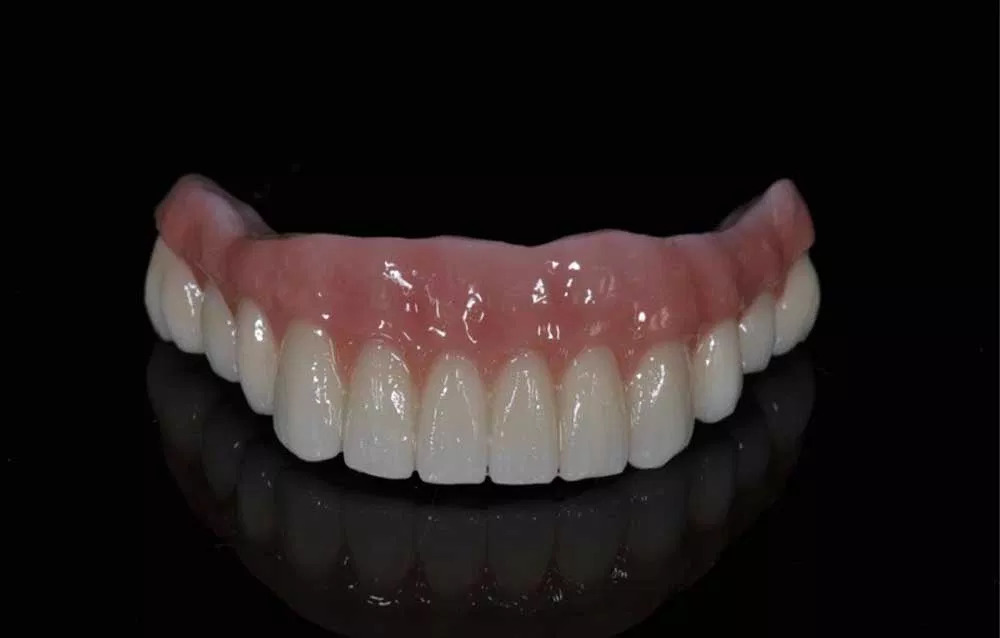
Zirconia crowns and bridges

Monolithic and layered zirconia for posterior strength and anterior aesthetics, milled in house and finished by hand.
What it is

Zirconia is our most-prescribed material. Monolithic zirconia is milled as one solid piece for maximum strength in the posterior. Layered zirconia adds porcelain on the facial surface where translucency matters.
We mill every unit on site, so a remake or an adjustment does not wait on an outside milling center. Multi-layer discs give a natural gradient from cervical to incisal.

When to prescribe it

  • Posterior crowns, especially for bruxers
  • Long-span bridges where strength is the priority
  • Patients with limited occlusal clearance
  • Anterior crowns, layered, where a high-translucency material is too weak
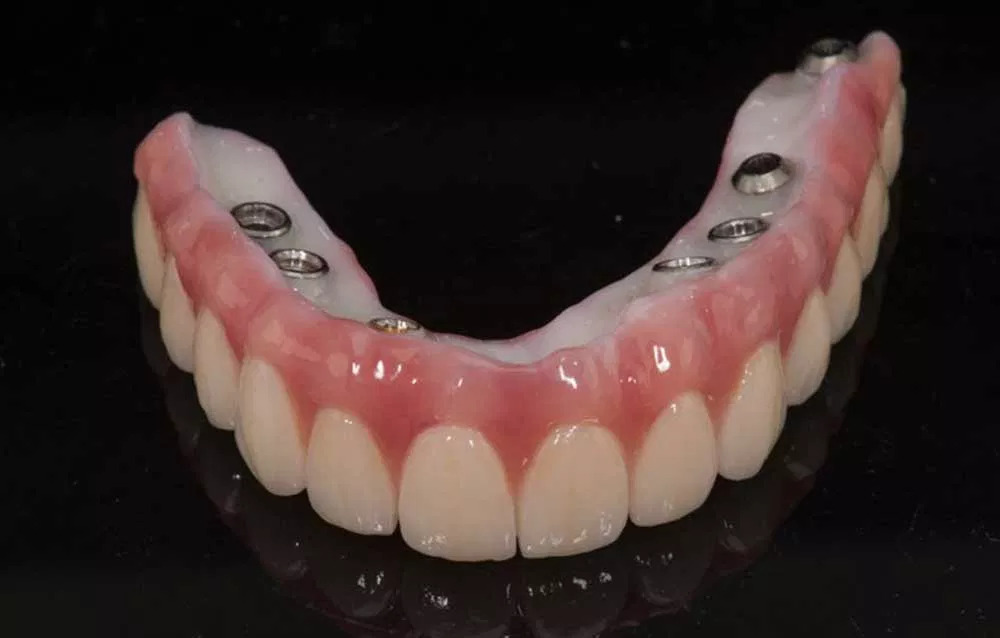
  • Screw-retained implant crowns on a titanium base

Why dentists choose ours

Milled in house

No outside milling center, so no added days.

Monolithic or layered

We advise which fits the tooth and the patient.

Minimal prep options

Works at reduced clearance. [Your minimum thickness]

Hand-finished

Stained and polished by a ceramist, not just machinefinished.

CASE GALLERY

Recent work from our lab

Ordering details

Materials:
High-strength multilayer and high-translucency zirconia, selected according to esthetic demands, restoration location, span length, and functional load.

Turnaround:
5–7 working days.

What to send:
Digital scan or conventional impression, opposing arch, bite registration, shade information, and clear shade photographs with a shade tab in frame.

Rx note:
Please specify monolithic or layered zirconia, final shade, translucency preference, margin design, occlusal requirements, and any special characterization. Recommended reduction depends on the zirconia type and clinical situation.

Questions dentists ask

Choose monolithic zirconia when strength, durability, and reduced risk of chipping are the priority, especially for posterior restorations and bridges. Layered zirconia is preferred when maximum esthetics and natural characterization are required, particularly in the anterior region.

As a general guideline, allow approximately 1.0–1.5 mm occlusal reduction and around 0.8–1.0 mm axial reduction, depending on the zirconia type and restoration design. More space may be required for layered or highly esthetic cases.

Yes. Zirconia can be adjusted chairside using appropriate fine diamond instruments with adequate water cooling. After adjustment, the surface should be carefully polished with a zirconia polishing system to maintain smoothness and minimize wear on the opposing dentition.

Yes. We fabricate zirconia implant restorations ranging from single crowns to multi-unit bridges and full-arch cases. Depending on the case, zirconia may be bonded to a compatible titanium base or incorporated into a screw-retained implant restoration.

Planning an All-on-X surgery?

A Smiledent technician can join your team chairside for conversion and same-day or next-day temporaries.